
Employee Benefits In MSMEs in India
- Avishek Saha
- Dec 2, 2025
- 3 min read

With hindsight on the impact of COVID 19, many MSMEs are actively pursuing affordable and robust employee benefits. This effort aims to cultivate an environment where employers are perceived as responsible, prioritizing measures to minimize non compensation attrition. Additionally, it fosters a sense of loyalty among employees, directly influencing the productivity of any organization.
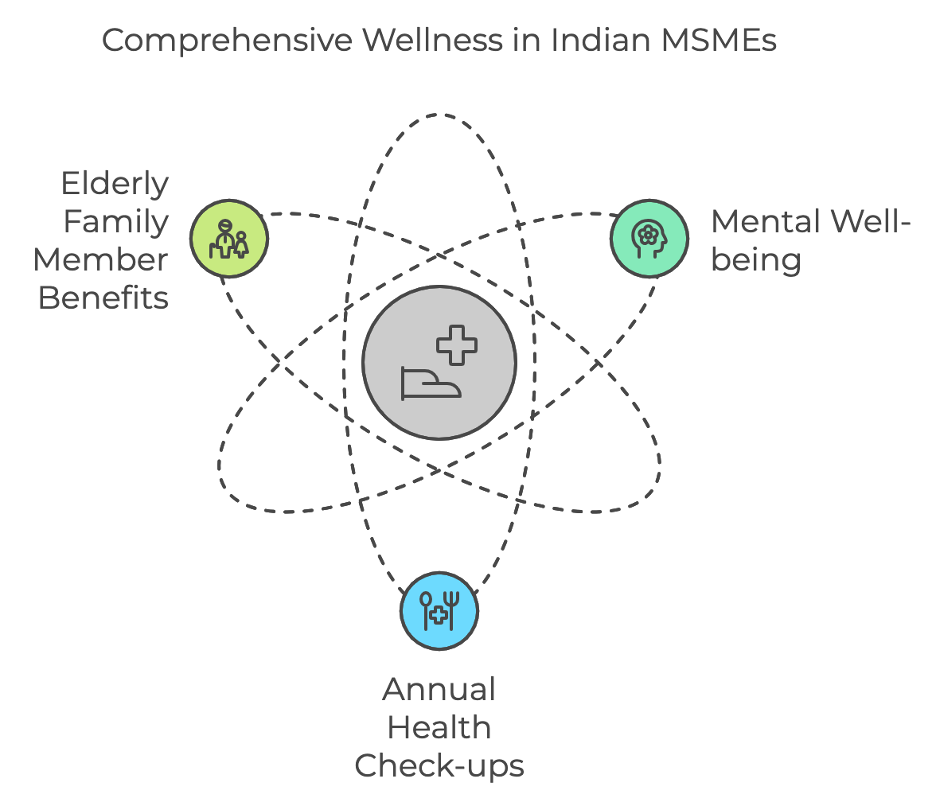
In the fiscal year 2022, nearly two in three Indian start-ups and MSMEs embraced comprehensive wellness features in their corporate healthcare subscription plans in FY22. These initiatives encompass a focus on mental well-being, provision for complete annual health check-ups for employees and their families, and extending healthcare membership benefits to employees' elderly family members.
Historically, MSMEs faced challenges in accessing affordable healthcare products, particularly insurance. With a workforce 460 million people, the majority relying on their employers for healthcare and emergency expenses, this sector has been crucial. Its worth noting that India bears the maximum out-of-pocket healthcare expenditure among G20 countries, which pushes nearly 60 million people into poverty every year (National Health Authority, 2020).
What Is the role Of MSME in the economic development of India?
As the years have progressed, over 63 million MSMEs have proliferated across the country. Statistics spanning these years underscore the significant contribution of the MSME sector to the country's GDP. As recently as FY20, MSMEs accounted for 30 % of India's GDP. Furthermore, this sector has been a substantial source of employment opportunities on a national scale.
MSMEs have played a crucial role in the industrialisation of the country's rural areas in very cost-effective methods. In terms of international trade, MSMEs have represented nearly 40% of India's total exports. Even during the economic crisis caused induced by COVID-19 pandemic, the sector received credit for playing a pivotal role in India's economic recovery.
Key challenges to providing health care to MSMEs and SME
MSMEs play a crucial role in the Indian economy, contributing significantly to employment generation and economic growth. However, providing adequate healthcare to employees in these enterprises comes with several challenges. Some key challenges include.
Affordability and cost management
Many MSMEs and SMEs operate on tight budgets, making it difficult for them to allocate sufficient funds for healthcare benefits
Limited financial resources may result in inadequate health insurance coverage or the absence of comprehensive healthcare programs for employees
Lack of infrastructure and access - In many regions, especially rural areas, the healthcare infrastructure may be fragmented and insufficient. Limited access to quality healthcare facilities can affect the health outcomes of employees in MSMEs
Administrative complexity
MSMEs may face difficulties in implementing and managing employee benefit programs, including health insurance and wellness initiatives, due to administrative complexities and lack of expertise.
MSMEs often experience higher employee turnover rates. This can make it challenging to implement long-term health and wellness programs as employees may not stay with the company long enough to see the benefits.
Navigating healthcare compliance and regulatory requirements can be complex for MSMEs. Understanding and adhering to health-related regulations can be challenging, and non-compliance may result in legal consequences
Implementing health technologies and digital health solutions may be challenging for MSMEs due to cost implications and the need for technological infrastructure
Customisation and diverse workforce needs
Large-scale healthcare programs implemented by larger corporations may not be easily adaptable or scalable for MSMEs. Tailoring healthcare solutions to the specific needs and capacities of smaller enterprises is a challenge
India is culturally diverse, and healthcare practices can vary across regions. Designing healthcare programs that are culturally sensitive and region-specific can be a challenge for businesses operating in multiple locations
Lack of awareness on the usage of healthcare benefits
Employees in MSMEs may have limited awareness and understanding of the importance of healthcare. This can lead to a lack of interest in seeking preventive care or participating in health and wellness programs
Mental health issues are gaining recognition globally, but there is still a lack of awareness in many workplaces, including MSMEs. Addressing mental health concerns and providing support can be challenging
To overcome these challenges, collaboration between the government, industry associations, and healthcare & insurance providers is essential. Policies that incentivize MSMEs to invest in employee health, coupled with awareness campaigns, can contribute to improved healthcare outcomes for employees in smaller enterprises



Comments